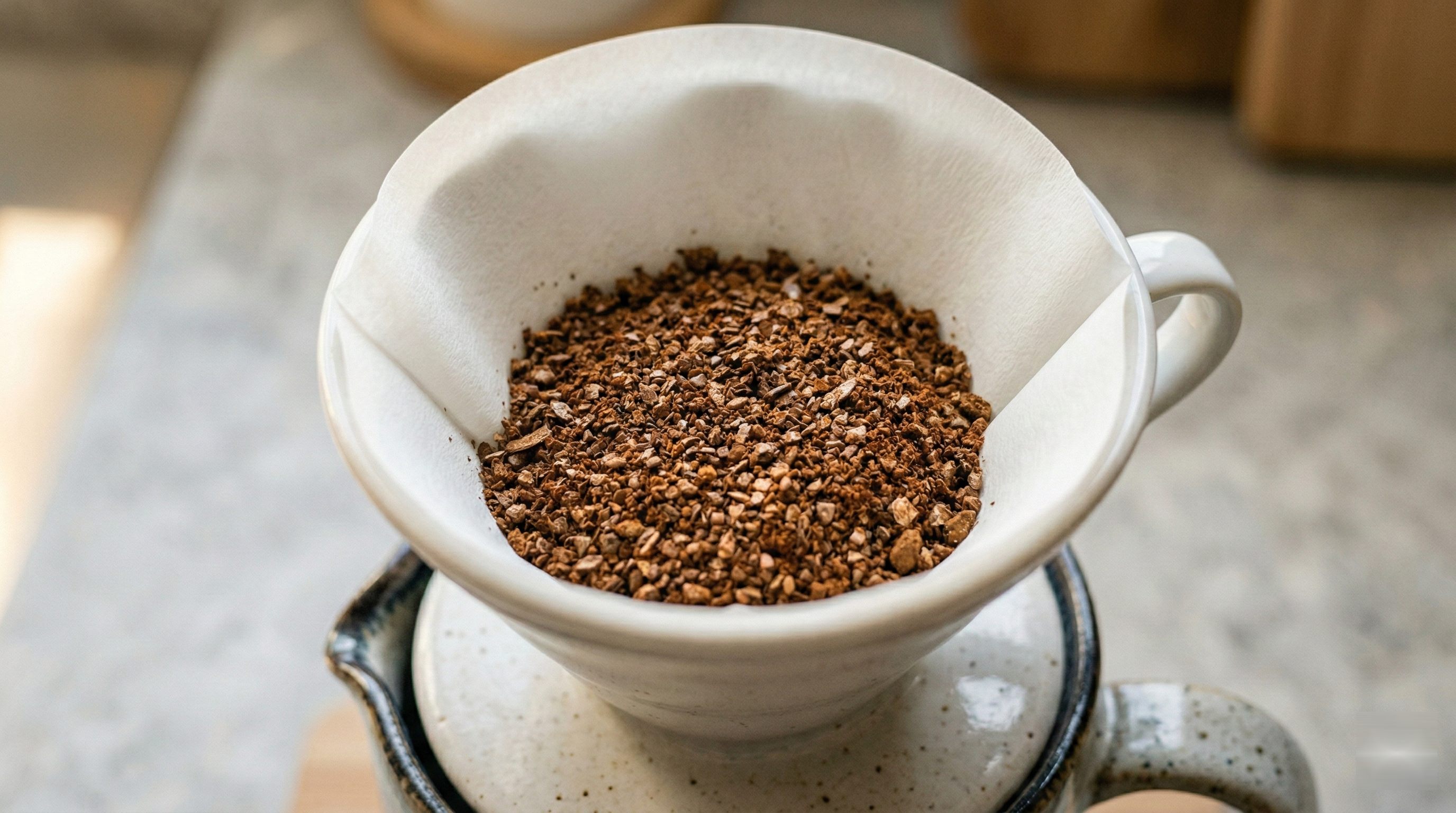
How to Dial In Your Grind Size for Pour-Over Coffee
Learn how to find the perfect grind size for your pour-over coffee. Step-by-step dial-in process, grind settings for V60, Kalita Wave, and Chemex, plus a troubleshooting guide for bitter or sour brews.
Why Grind Size is the Most Important Variable
If your pour-over tastes off — bitter, sour, flat, or just underwhelming — grind size is almost always the culprit. You can have exceptional beans, a precise water temperature, and perfect technique, but the wrong grind will ruin the cup every time.
Grind size controls how fast water flows through the coffee bed and how much surface area is exposed to extraction. Get it right and your coffee will taste sweet, balanced, and complex. Get it wrong and you'll land in bitter or sour territory — two very different problems with very different fixes.
The Science in Plain English
Too Fine → Over-Extraction → Bitter
Fine grounds have more surface area and slow the water flow. The water spends too long in contact with the coffee, pulling out the harsh, astringent compounds that develop late in extraction. Result: bitter, dry, chalky.
Too Coarse → Under-Extraction → Sour
Coarse grounds drain quickly. The water rushes through before it can dissolve the sweeter, more complex compounds. Result: sour, sharp, weak, or thin — like unripe fruit.
The goal is a balanced extraction that captures the sweet, fruity, and complex flavours while leaving the harsh ones behind.
The Dial-In Process: Step by Step
Dialling in is iterative. The key rule: change one variable at a time. If you adjust grind size and pour speed simultaneously, you won't know which change fixed (or caused) the problem.
Brew and taste
Use your standard recipe. Let the cup cool to around 60°C before tasting — hot coffee masks flavour defects.
Identify the problem
Bitter or harsh? Too fine. Sour, sharp, or watery? Too coarse. Consult the troubleshooting table below if you're unsure.
Adjust by one or two notches
Move coarser to fix bitterness, finer to fix sourness. Small adjustments make a noticeable difference — resist the urge to jump multiple steps.
Brew again with the same recipe
Same dose, same water weight, same pour pattern. The only thing that changed is grind size.
Repeat until balanced
A dialled-in cup tastes sweet, clean, and complex with no harsh edges. This typically takes 2–4 brews with a new bag of coffee.
Grind Size by Brewer
Different brewers have different flow rates, which means the same grind that works for a V60 will produce a completely different result in a Chemex. Use this table as your starting point.
| Brewer | Grind Range | Descriptor | Brew Time |
|---|---|---|---|
| Hario V60 | Medium-fine | Fine table salt | 2:30–3:30 min |
| Kalita Wave | Medium | Coarse table salt | 3:00–4:00 min |
| Chemex | Medium-coarse | Raw sugar granules | 4:00–5:00 min |
The Chemex requires a coarser grind because its thick paper filters slow extraction significantly. The V60's open design and thin filter mean water flows faster, demanding a finer grind to achieve the same extraction time.
Adjusting for Roast Level
Light Roasts
Light roasts are denser and less soluble. They need a finer grind and/or higher water temperature to extract fully. Start slightly finer than the table above and adjust from there.
If light roast coffee tastes flat or sour, go finer before anything else.
Dark Roasts
Dark roasts are more porous and extract quickly. A coarser grind prevents the bitter, ashy notes from dominating. Start slightly coarser than the table above.
If dark roast coffee tastes harsh or burnt, go coarser first.
Common Mistakes
- Changing multiple variables at once. If you adjust grind size and dose in the same brew, you can't isolate the cause of any change in flavour. One variable at a time, always.
- Making huge adjustments. Jumping five notches at once makes it easy to overshoot. Two notches is a meaningful change — feel the difference before going further.
- Not accounting for bean age. Fresh beans (within 2 weeks of roast) off-gas CO₂, which can cause uneven extraction. Let them rest 7–14 days post-roast. Older beans (beyond 6 weeks) may need a finer grind as they become less soluble.
- Tasting coffee too hot. Above 70°C, your palate struggles to detect bitterness and sourness accurately. Let it cool before evaluating.
- Skipping the Rao Spin. An uneven coffee bed introduces channelling, which mimics both over- and under-extraction symptoms. Ensure technique is consistent before blaming grind size.
Troubleshooting Guide
Grind is too fine → go 1–2 notches coarser
Grind is too coarse → go 1–2 notches finer
Grind is too coarse → go finer, or increase dose slightly
Grind is too fine → go coarser. Also check filter isn't clogged with fines.
Grind is too coarse → go finer
Slightly under-extracted — go 1 notch finer, or raise water temperature 1–2°C
Grinder Quality Matters
A consistent grind is as important as the right grind size. Blade grinders produce inconsistent particle sizes — a mix of powder and boulders — which causes simultaneous over- and under-extraction that no amount of adjustment can fix. A burr grinder is essential for pour-over.
If you're looking for a grinder, the Baratza Encore is a reliable entry-level electric option widely available in Australia. For travel or a quieter grind, see our premium hand grinder comparison.